
It often comes to a surprise as people that the South Pole Station runs entirely on jet fuel. Specifically a variety of fuel known as AN-8. It is quite clean burning, but the station still needs to stay warm during the winter, and the big science in the dark sector uses quite a lot of energy. IceCube by itself is about 10% of the stations draw. In total, approximately 450,000 gallons of fuel are burned per year. But the station is more than 800 miles away from the shore, so the fuel must come either by air or ground. So 3 large convoys of tractors, known as The Traverse, drag the fuel there every summer.
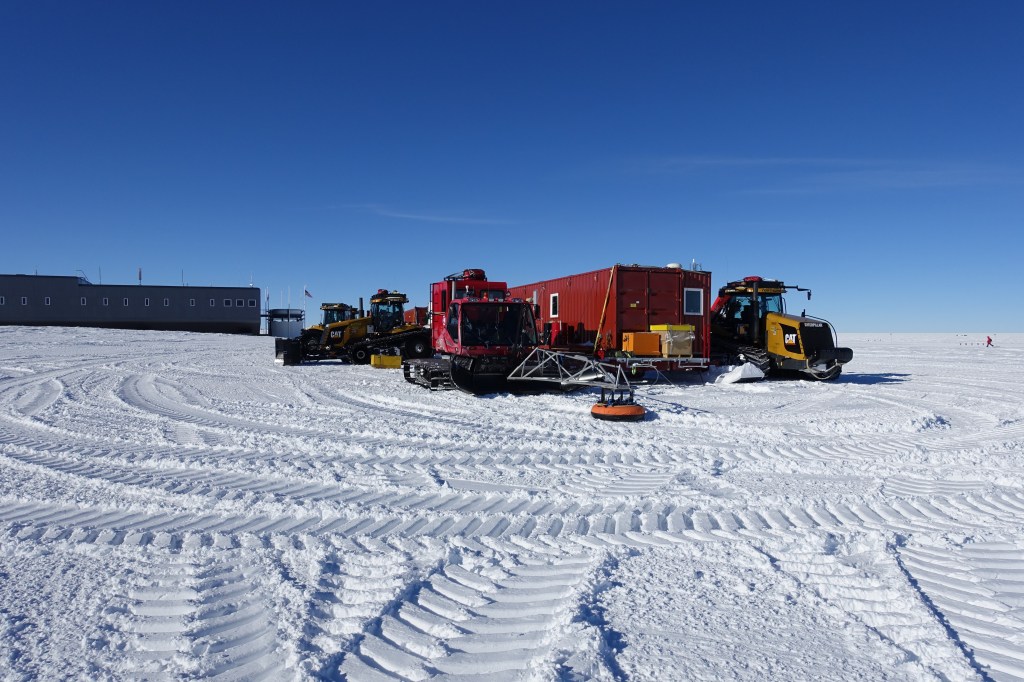
The Traverse spends between 20 and 30 days to go the ~900 miles on the path from McMurdo to the pole. The uncertainty is both in weather and because the first traverse must go a bit slower with the Ground Penetrating Radar up front to detect whether any new crevasses have formed the preceding year. While on traverse, people sleep 2 to a bunk and trade off cooking. When they make it to the station, it is hopefully about time for Thanksgiving or Christmas and time for a well earned rest.
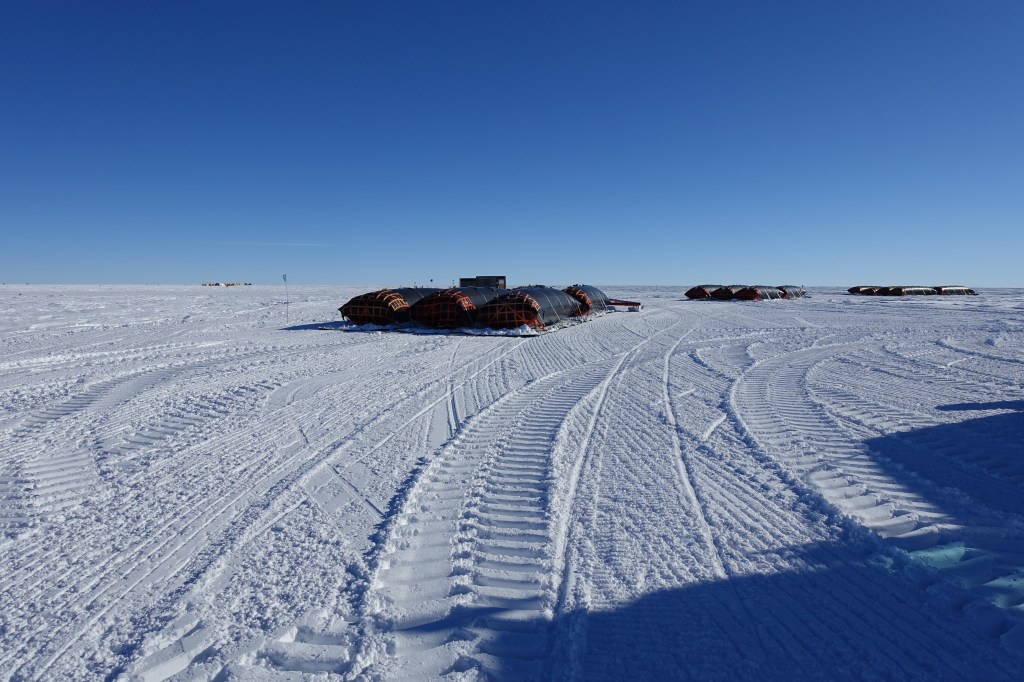
The traverse does not bring all of the fuel, however. A decent fraction comes in the tanks of the LC130s. It is difficult to quantify the exact savings, but it is indisputable that it is much more efficient to drag it on tractors rather than fly it in. While the traverse rests at the station (And takes showers), they are nice enough to open up their tractors and lodgings so that we can see how they live.

The tractors typically are bale to get back to sea level a bit faster – they have a lighter load, and it is overall more downhill (We are at 9300 ft of elevation at the pole). They do carry some things, however – the station does not dump any trash and so most of the trash is put on the sleds to head back. As a result, there is heavy emphasis on sorting the trash and on drying it out so that you aren’t carting back heavy blocks of ice. Occasionally, the traverse is also used to bring in oversized science equipment. The C17 Globemaster cannot land at the pole, so anything that flies must fit in the LC130 Hercules.
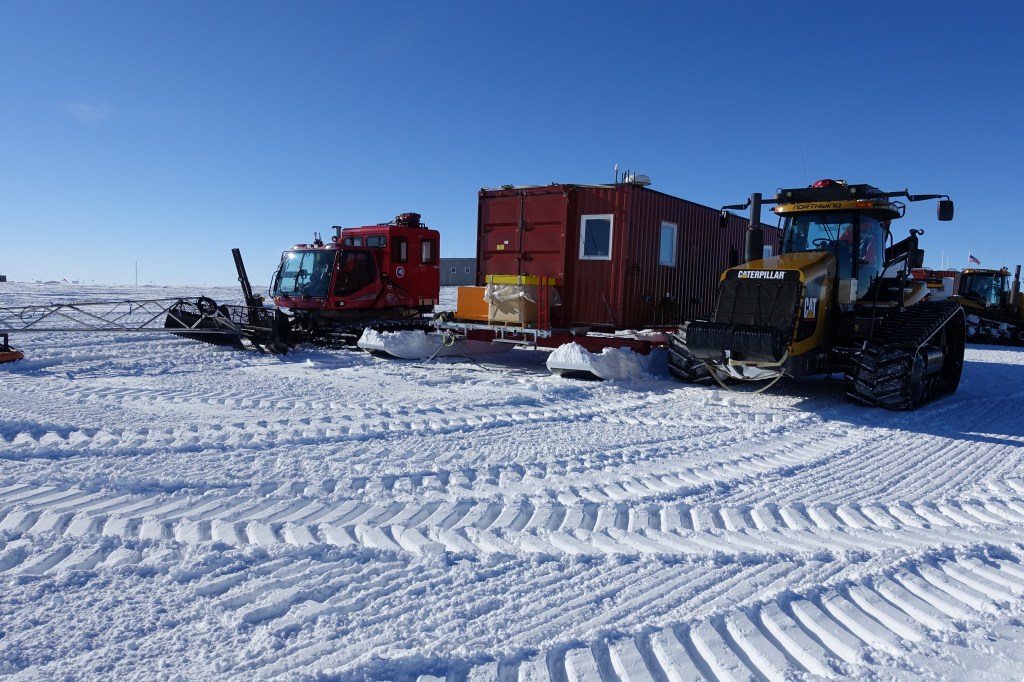
With some of the new science coming to the pole, there is rumor of expanding the traverse, both in size and number. It is one of the cooler things to see at the station though – you never expect anything coming over the horizon.
 Turation