
The geographic south pole, or 90S, is one of only 2 places on the planet where the sun rises and sets just once per year. The other is the geographic north pole. The sun set is on the March equinox, and the sun rise is on the september equinox. In between, the sun is either constantly below the horizon or slowly spiraling up or down in the sky while providing 24 hourse of light.

While it is a bit unkind to the collective station sleep schedule, it means we get multiple weeks of brilliant colors in the sky and several hours of the actual rise or set proper.
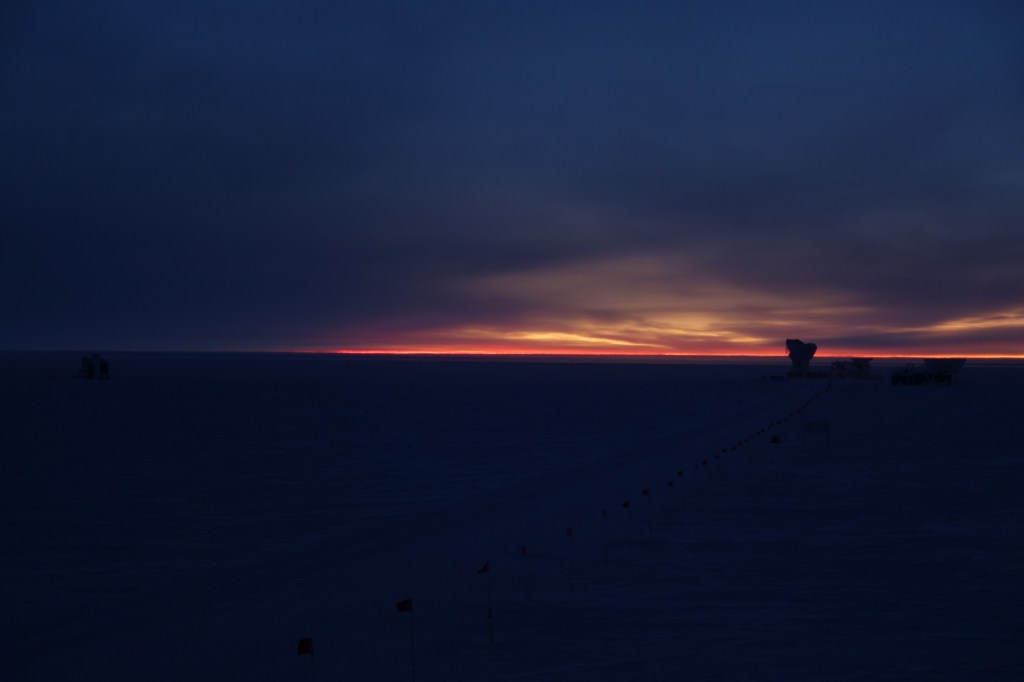
The way we see the sun is complicated by our atmosphere – it isn’t super thick, but it is thick enough to bend the light slightly over the distances we are talking about, so the sun may look like it hasn’t quite set when it actually has. This is further complicated by the “thermal inversion” near the pole, where the air actually gets warmer a few tens of meters above ice level, which changes it’s index of refraction. All of this means that it is easier to see the phenomena known as the “green flash” and, less common “blue flash” – they stick around for longer.

The flashes occure because the green light bends around the earth more than the yellow, so at the very top of the sun, only the green makes it over. I’m told this is very briefly visible over the water on a still day, but I have never seen it. You can see other strange atmospheric effects in the picture above – the hirizon is well below the sun due to the bending effects. The green is above the sun for much the same reason that the air above hot asphault shimmers. Clouds moved in for our sunset, so we were very happy to see it for sunrise.
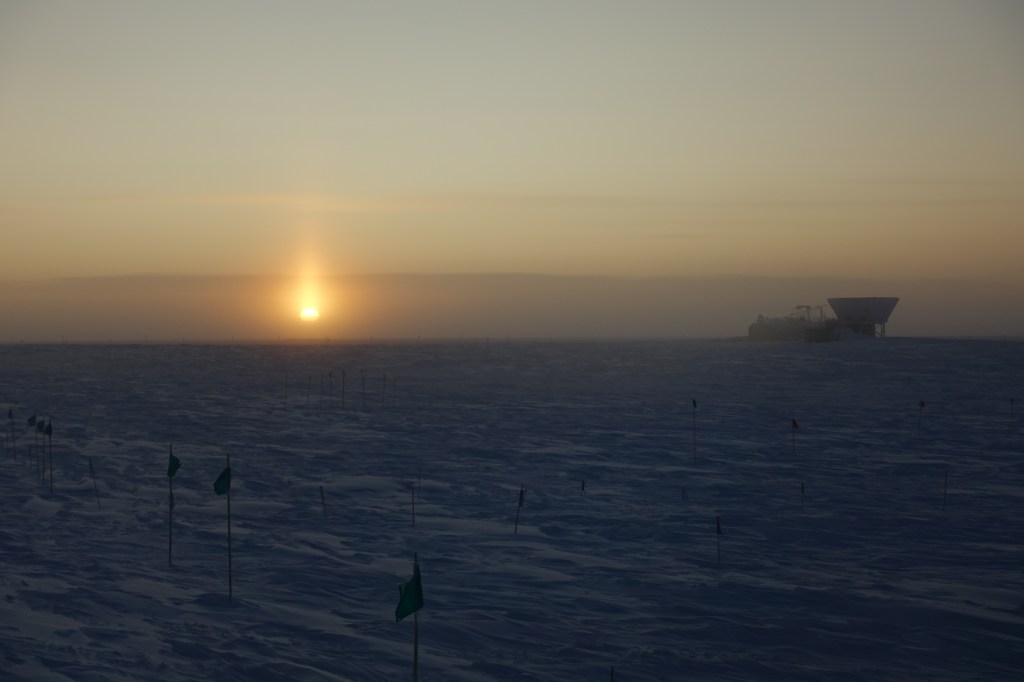
I was able to capture time lapses of the sunrise and the sun set – you can see the strange way the sun moves in them.
 Turation